Dec 27, 2014

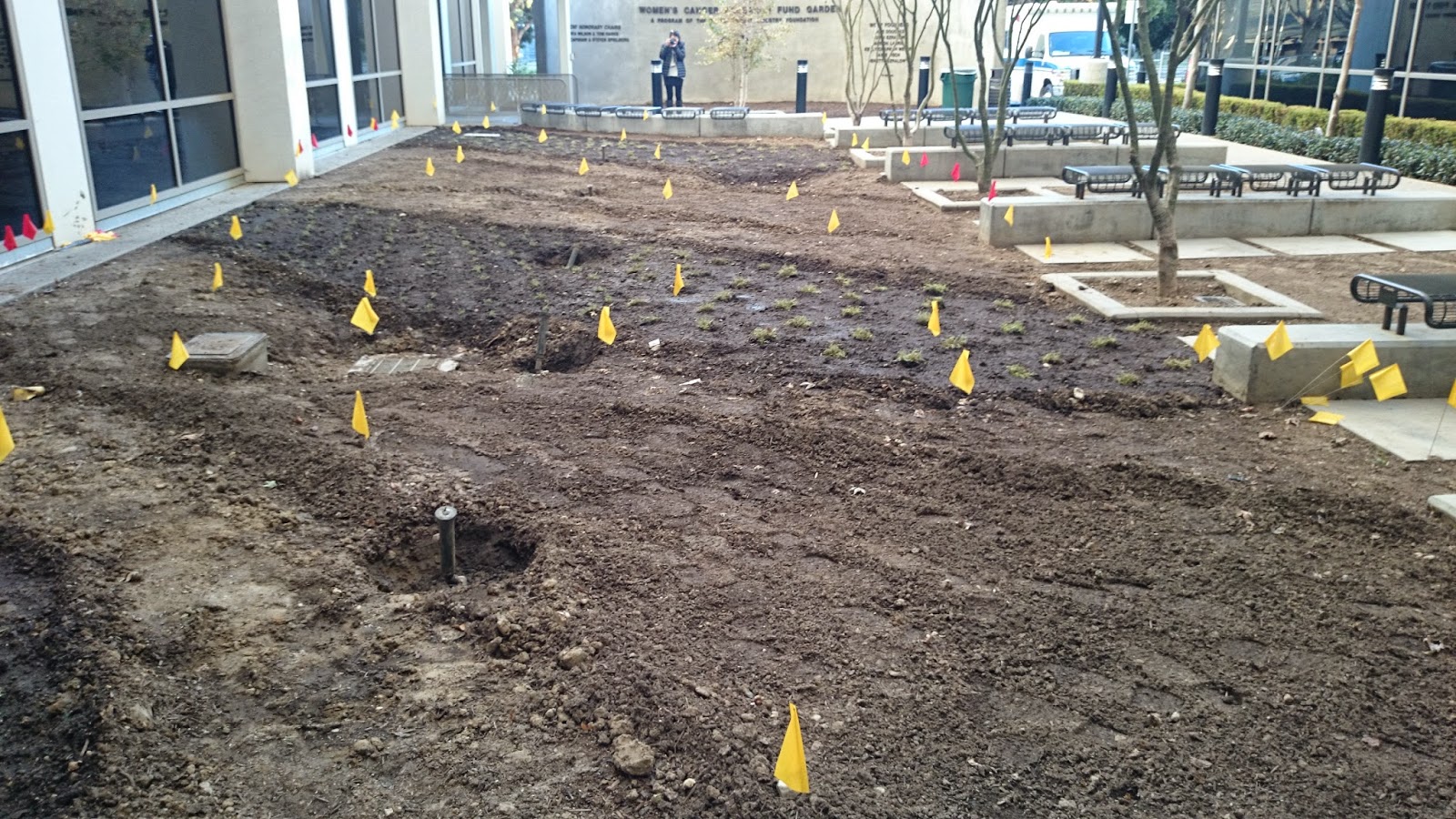
Women Cancer Research Fund Garden at USC Keck Medical Center


Planted a week ago!

A collaboration Project
Kurapia Inc.
AHBE Landscape Architects
USC Keck Medical Center
LA Department of Water & Power installs water meter.


Oct 30, 2014

El Camino College

El Camino College Horticulture & Environmental Club presents California Drought Workshop for Landscape architects


CITI Cable


Kurapia Presentation
by
Mark Ohde, Kurapia Inc.
Tom Hawkins, Florasource, Ltd.
David Plascencia, EchoTech Inc.


Metropolitan Water District of Southern California


LA Department of Water Power booth

Testing Kurapia SOD/ROLL


Oct 24, 2014

“Kurapia is a great option where you need a groundcover that won’t get irrigated.

Davis enterprise, a community newspaper covering Davis and Yolo County released on Oct 24, 2014, an article titled UC researchers: How low-water can our landscapes go? The article reported a story on UC Agriculture and Natural Science researchers Loren Oki and Karrie Reid test plants’ ability to survive and thrive with varying levels of water. According to a California Department of Resources study, about 53 percent of our landscapes. “Kurapia is a great option where you need a groundcover that won’t get irrigated. I think it will be great in what they call ‘hell strips,’ ” Reid says. “That’s the area between the sidewalk and the street where it’s notoriously difficult to grow anything. Kurapia will do just fine there! Homeowners may want to consider using it as a lawn replacement, too.

UC Reseachers

How low water can our landscapes go?

University of California Agriculture and Natural Resources researchers Loren Oki and Karrie Reid.

Kurapia is a great option where you need a groundcover that won’t get irrigated. I think it will be great in what they call ‘hell strips,’ ” Reid says. “That’s the area between the sidewalk and the street where it’s notoriously difficult to grow anything. Kurapia will do just fine there! Homeowners may want to consider using it as a lawn replacement, too. We’ve found that it looks good year-round.
“Really the public wants it all,” she continues. “Whether you are a homeowner or a large-scale landscaper, we want beautiful and low-water. So we don’t solely look at water use. We want to also know how irrigation and its frequency correlate to attractiveness, seasonal interest and blooms. We report on that, too.”
The researchers’ full reports can be found on the California Center for Urban Horticulture’s website, ccuh.ucdavis.edu.